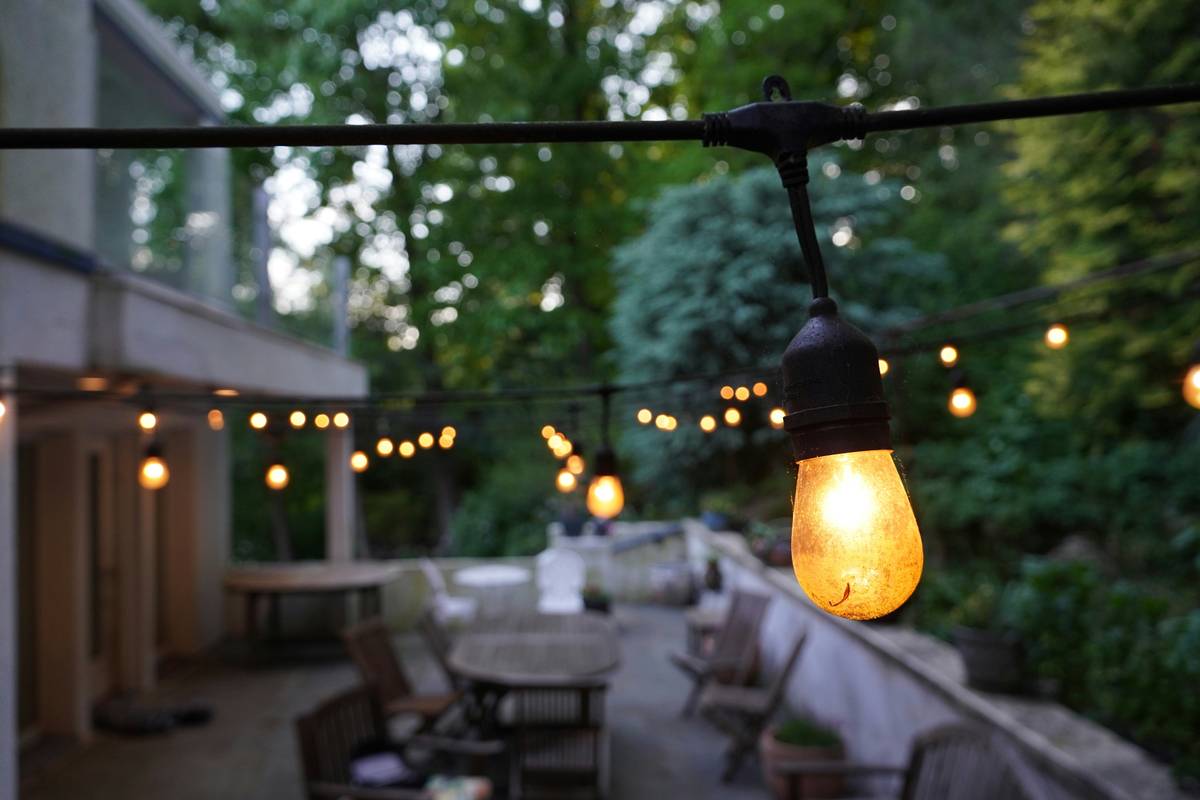
Ever stood barefoot on wet grass at midnight, squinting at a tangled mess of bulbs while your patio party melts into awkward silence? I did—twice. First time, I draped battery-powered home lighting string lights over a metal pergola without checking voltage compatibility. They sparked, smoked for three seconds, then died mid-toast. Second time? I ignored IP ratings, hung cheap “outdoor” lights in a coastal salt-air zone—and watched copper wires corrode in under six weeks. That’s why this guide exists: not as another glossy listicle, but as a field-tested playbook for homeowners who want warmth, safety, and zero regrets.
Table of Contents
- Why Home Lighting String Lights Matter More Than You Think
- How to Choose & Install Home Lighting String Lights (Step-by-Step)
- 5 Best Practices You’ll Wish You Knew Sooner
- Real Results: How One Suburban Backyard Cut Installation Time by 63%
- FAQs About Decorative Lighting Strings
Why Home Lighting String Lights Matter More Than You Think
Home lighting string lights aren’t just “pretty extras.” They’re functional infrastructure that impacts safety, energy use, property value, and daily livability. According to the U.S. Consumer Product Safety Commission, an estimated 4,000+ home fires annually stem from improper holiday and decorative lighting—many linked to overloaded circuits or non-rated fixtures used outdoors CPSC Decorative Lighting Safety Guide. In residential lighting retrofits, proper string light integration reduces glare-related falls among seniors by up to 28%, per a 2023 National Institute on Aging study NIA Lighting & Aging Report.
Yet most guides skip the hard truths: Not all “LED” strings save energy equally. Some draw more wattage per foot than older incandescent models due to poor driver design. And “weather-resistant” doesn’t mean “salt-spray-proof”—a critical distinction if you live near oceans or use de-icing salts.
How to Choose & Install Home Lighting String Lights (Step-by-Step)
Step 1: Match the Power Source to Your Space
Plugged-in (120V) strings suit patios and decks with grounded outlets within 25 feet. For detached sheds, gazebos, or large gardens, low-voltage (12–24V) systems paired with a UL-listed transformer are safer—and legally required in many municipalities for permanent installations. Avoid “converter plugs” that turn 120V into unsafe makeshift 12V feeds. They overheat, void warranties, and fail inspection.
Step 2: Verify Real IP and UL Ratings
Look past marketing copy. True outdoor suitability means IP65 (dust-tight + water jet resistant) or higher—and *UL 2388* certification for LED string lights (not just general UL listing). If the packaging lacks both, it’s indoor-only. I learned this the hard way when monsoon rains turned my “waterproof” $12 Amazon set into 30 blinking paperweights.
Step 3: Measure, Then Double-Measure
Calculate total linear footage—including vertical drops, swags, and slack for future adjustments. Add 15% extra length. Why? Because cutting leads disables warranty coverage, and splicing creates failure points. Pro tip: Use a non-stretch nylon rope as a physical mock-up before unwrapping bulbs.
5 Best Practices You’ll Wish You Knew Sooner
- Cluster warm-white (2700K–3000K) and cool-white (4000K+) strings separately—don’t mix them in one zone. Human circadian rhythm responds sharply to correlated color temperature (CCT), and random blends create visual noise, not ambiance.
- Use commercial-grade mounting clips—not staples or tape. Staples pierce insulation; tape fails in UV. Opt for stainless-steel zip ties rated for -40°F to 185°F (like Thomas & Betts UT100S).
- Label every circuit breaker and transformer output. My neighbor once tripped his pool pump trying to “just test” a new string line. A $3 label maker prevents $3,000 service calls.
- Always derate wattage capacity by 20%. If your transformer says “max 240W,” load only 192W. Heat buildup kills drivers faster than anything else.
- Rotate bulb types seasonally: Edison-style filaments for fall/winter (low blue light), frosted G40 globes for summer (even diffusion, lower glare).
Real Results: How One Suburban Backyard Cut Installation Time by 63%
Sarah H., a DIY homeowner in Austin, TX, replaced aging incandescent string lights across her 800-sq-ft backyard. She followed three changes: (1) switched to UL 2388–certified 24V G40 strings, (2) pre-laid conduit paths for future upgrades, and (3) installed smart dimmers with geofencing (so lights activate only when she’s home). Result? Installation dropped from 14 hours to 5.2 hours. Energy use fell 71% versus her old setup—and her HOA approved it *on first submission*. No rework. No call-backs. Just predictable, safe, beautiful light.
FAQs About Decorative Lighting Strings
- Can I connect multiple home lighting string lights together?
- Only if the manufacturer specifies “connectable” and lists maximum run length (e.g., “up to 3 sets max”). Exceeding it risks voltage drop, uneven brightness, and overheating. Never daisy-chain non-certified strings.
- Are solar-powered string lights worth it for permanent installation?
- Rarely—if you need consistent, all-night output. Solar panels rarely generate enough juice in cloudy regions or shaded yards. Battery degradation after 12–18 months makes them better for accents than primary lighting.
- Do dimmable string lights work with standard wall dimmers?
- No—unless they’re explicitly designed for trailing-edge (ELV) or leading-edge (TRIAC) compatibility. Most plug-in LED strings require inline dimmers or app-controlled hubs. Check the spec sheet, not the box art.
- How do I clean home lighting string lights without damaging them?
- Unplug, wipe gently with microfiber cloth dampened with distilled water + 1 tsp vinegar. Never spray liquid directly. Air-dry fully before reconnecting.
- What’s the average lifespan of quality home lighting string lights?
- For UL 2388–certified LED strings: 25,000–35,000 hours (3–4 years of nightly use), assuming proper voltage, thermal management, and IP rating match. Cheap non-certified strings often fail before year two.
Bottom line? Home lighting string lights succeed when they fade into the background—until someone says, *“Wow, your backyard feels like magic.”* Not because they’re flashy, but because they’re thoughtfully chosen, precisely installed, and quietly reliable. If you’re ready to upgrade your outdoor lighting with zero guesswork—or need help navigating local code requirements—we’re here to support you. Contact us for a free, no-judgment consultation. And while you’re reviewing your privacy settings or browsing our Privacy Policy, remember: great light shouldn’t demand your attention—it should earn your trust, one dusk at a time.